The Tool That Bypasses Two-Factor Authentication and Automates Phishing Attacks: Modlishka Tool
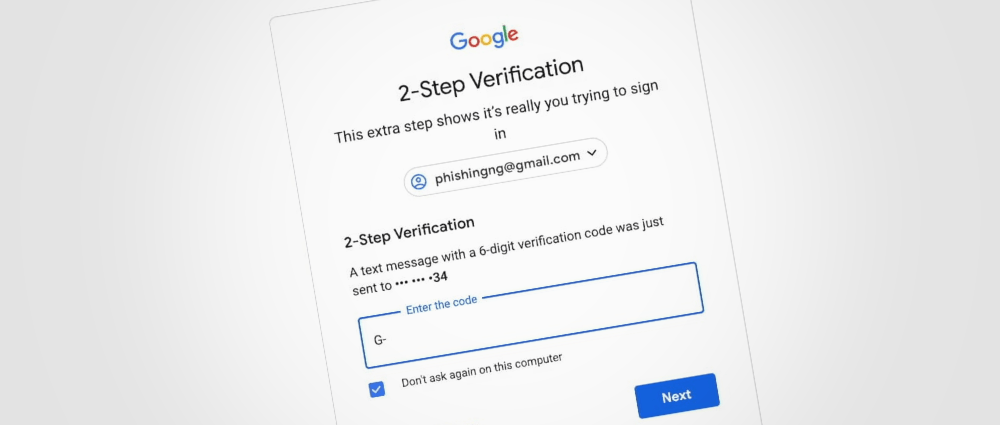
A new penetration testing tool released by a security researcher at the start of the year can automate phishing attacks in a way never seen before, and can even carry out logins for accounts protected by two-factor authentication (2FA).
The new tool, called Modlishka, was created by Polish researcher Piotr Duszyński.
Modlishka is what IT professionals call a reverse proxy, but it has been modified to handle the traffic used for login pages and phishing operations.
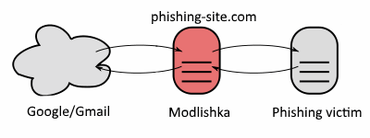
It sits between a user and a target website - such as Gmail, Yahoo, or ProtonMail. Phishing victims connect to the Modlishka server (which hosts a phishing domain), and the reverse proxy component behind it makes requests to the site being impersonated.
The victim receives authentic content from the legitimate site, for example Google, but all traffic and all of the victim's interactions with the legitimate site pass through, and are recorded on, the Modlishka server.

All passwords a user enters are automatically saved to the Modlishka back-end panel, and the reverse proxy also prompts users for 2FA tokens when their accounts are configured to require them.
If attackers are ready to collect these 2FA tokens in real time, they can use them to log in to victims' accounts and create new, legitimate sessions.
Because of this simple design, Modlishka does not use any of the "templates" that phishers use to define clones of legitimate sites. Since all content is fetched from the real site in real time, attackers do not need to spend much time updating and fine-tuning templates.
Instead, all attackers need is a phishing domain name (to host on the Modlishka server) and a valid TLS certificate, so that users are not warned about a missing HTTPS connection.
The final step is to set up a simple configuration file that sends victims on to the real, legitimate sites at the end of the phishing operation.
In an email to ZDNet, Duszyński described Modlishka as a point-and-click, easy-to-automate system that requires minimal maintenance, unlike earlier phishing toolkits used by other penetration testers.
“When I started this project (it was in early 2018), my main goal was to write an easy-to-use tool that would eliminate the need to prepare static web page templates for every phishing campaign I ran,” the researcher told us.
"As a MITM actor, the approach of building a universal and easily automated proxy emerged as the most natural direction. Despite some technical challenges that came up along the way, the overall result looked really satisfying," he said.
“The tool I wrote is something of a game changer, because it can be used as a 'point and click' proxy that enables easy phishing campaign automation with full support for 2FA (the one exception being U2F protocol-based tokens - currently the only resilient second factor).
"There are some cases that require manual tuning (due to obfuscated JavaScript code or, for example, HTML tag security attributes such as 'integrity'), but these are fully supported by the tool and will also be improved in future releases," Duszyński told ZDNet.
An Amnesty International report published in December showed that advanced state-sponsored actors had already started using phishing systems capable of getting past 2FA.
Now there are fears that Modlishka will lower the barrier to entry, allowing so-called "script kiddies" to set up phishing sites within minutes, even with fewer technical skills. In addition, the tool will let cybercrime groups easily automate the creation of phishing pages that are harder for victims to detect and easier to maintain.
When we asked why he had released such a dangerous tool on GitHub, Duszyński gave a rather interesting answer.
“We have to face the fact that without a proof of concept that actually demonstrates it works, the risk is treated as theoretical, and no real measures are taken to address it properly,” he said.
“This status quo, and the lack of awareness about the risk, is a perfect situation for malicious actors to happily take advantage of.”
While Duszyński said his tool can automate the operation of a phishing site that gets past 2FA checks based on SMS and one-time codes, he noted that Modlishka is ineffective against U2F-based schemes that rely on hardware security keys.
Modlishka is currently available on GitHub under an open-source license. You can also find additional information on Duszyński's blog.
Modlishka Tool on GitHub: https://github.com/drk1wi/Modlishka